
Aromatherapy in Action: Choosing the Right Scents for Work and Rest
How Our Brain Perceives Scents: The Connection Between Aroma and Emotion
Of all the five senses, smell has the most direct and rapid access to our emotions and memory. This is due to the anatomy of our brain. When we inhale a scent, odor molecules hit receptors that are directly connected to the limbic system — the oldest part of the brain responsible for emotions, mood, and memory formation. The signal from a smell does not go through logical processing centers, as happens with sight or hearing; it immediately triggers an emotional reaction. This is why the smell of tangerines or pine can instantly transport us to childhood and evoke a holiday feeling, while the smell of a hospital can instantly provoke anxiety. Knowing this biological feature, we can use scents as a powerful tool to manage our own state. Aromatherapy is not just a pleasant addition to an interior; it is a scientifically proven way to influence your stress level, ability to concentrate, and quality of relaxation. A correctly chosen scent at home acts as an invisible mood switch.
Citrus and Pine: Scents That Help You Concentrate and Find Energy
If you have trouble waking up in the morning or experience an energy slump in the middle of the workday, the right scents can be a better alternative to another cup of coffee. Citrus smells (lemon, orange, grapefruit, bergamot) are the most famous natural energizers. They stimulate the nervous system, improve mood, help fight apathy, and clear brain fog. The scent of lemon, in particular, has been proven to increase concentration and reduce the number of errors during routine work. Rosemary and peppermint also wonderfully stimulate cognitive functions and improve memory — they are ideal for use in a home office. Pine scents, such as pine, cedar, or fir, act a little differently: they invigorate, but at the same time "ground" you, creating a feeling of freshness, as if you were in a spring forest after the rain. These scents are perfect for a morning shower (for example, a shower gel with pine extract) or for diffusing in the room during morning exercises or yoga.
Lavender, Chamomile, and Sandalwood: The Best Choices for Relaxation
When evening comes and the main task is to reduce stress levels and prepare for sleep, we need scents with a sedative effect. The undisputed leader in this category is lavender. Studies show that inhaling lavender essential oil lowers heart rate, reduces blood pressure, and slows down the activity of the nervous system, acting much like mild sedatives. Chamomile has a similar but softer effect, perfectly suited for creating a cozy, "homey" atmosphere. If you are looking for deeper, warmer scents for winter evenings, pay attention to woody and spicy notes: sandalwood, cedar, vanilla, or ylang-ylang. Sandalwood, in particular, has been used in spiritual practices for centuries because it helps stop the flow of obsessive thoughts and promotes deep relaxation. It is best to use these scents in the bedroom an hour before sleep or during an evening bath. It is important that these smells associate for you exclusively with rest, so you should not use them in your work area.
Aromatherapy Formats: Diffusers, Candles, Sprays, or Essential Oils
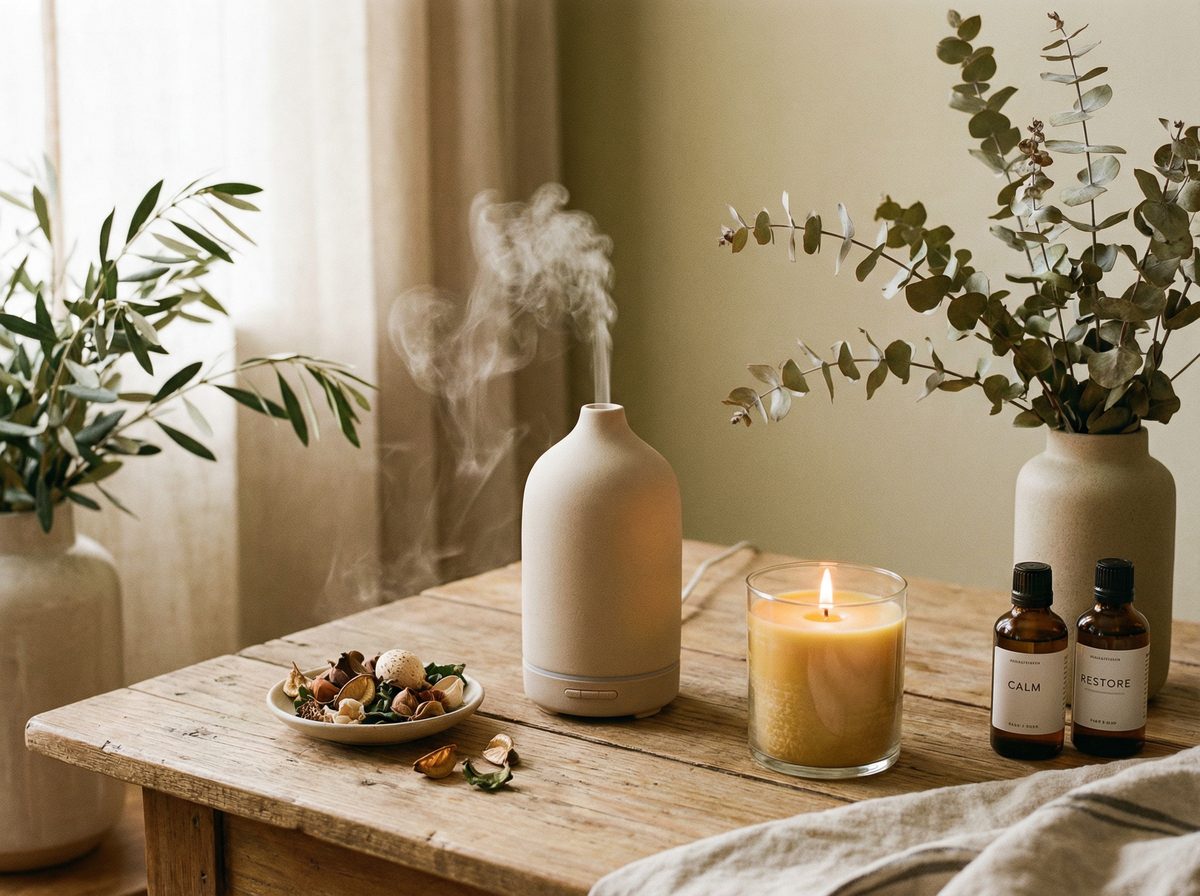
Today, there are many ways to fill your home with scents, and each has its advantages. Ultrasonic diffusers are one of the most effective and safe methods: they break water and essential oils into a cold micro-mist that quickly spreads through the room and additionally humidifies the air. You can easily change scents every day just by adding different drops of oil. Scented candles are a classic that combines smell with the magic of a live flame. However, it is important to choose candles made from natural wax (soy or coconut) with a cotton or wooden wick, as cheap paraffin candles emit toxic substances when burning. Reed diffusers are excellent for background scenting in small spaces, such as a bathroom or hallway; they do not require electricity or fire and work for months. Room and textile sprays are an ideal option for instant results: a couple of spritzes on decorative pillows, curtains, or bed linen will instantly change the mood of the room before guests arrive or before going to bed.
How to Create a Signature Home Scent That Will Always Bring Joy
Every home has its own unique smell, which we usually do not notice ourselves, but which guests immediately pick up on. You can consciously create a "signature scent" for your home, which will become your personal anchor of coziness and safety. Start with basic cleanliness: no perfume will hide the smell of stale air, a damp towel, or garbage. Regular ventilation is the canvas on which you will paint with scents. Next, determine the mood you want to broadcast. If you like freshness, mix the scent of cotton, sea breeze, and a bit of citrus. If you seek warmth, choose a mix of vanilla, cinnamon, and wood. Do not try to make the smell too intense; it should be a barely perceptible background, not hitting you in the nose from the doorway. Use the chosen scent consistently over a long period: light a candle with this scent every evening, or use a diffuser in the living room. Over time, your brain will firmly link this specific scent with the feeling "I am home, I am safe," and even on the hardest days, one breath of this scent will help you quickly return to a state of balance.