
From Cool White to Warm Yellow: The Impact of Light on Our Emotions
The Biology of Light: How Lighting Controls Our Circadian Rhythms
For millennia, the human body has evolved under the influence of natural sunlight, and our hormonal system still runs on this ancient clock. In the morning, when sunlight (especially its blue spectrum) hits the retina, the brain receives a signal to stop producing melatonin and start synthesizing cortisol, which gives us energy. In the evening, as the sun sets and the light becomes warmer and dimmer, cortisol levels fall and melatonin rises, preparing us for sleep. The problem with the modern world is that we spend most of our time indoors with artificial lighting, which disrupts these natural circadian rhythms. If you sit in a dimly lit room all day, you feel constant lethargy. And if you turn on bright cold light in the evening or look at a smartphone screen, you trick your brain into thinking it is the middle of the day. Understanding this biology is key to creating the right atmosphere at home: lighting must change throughout the day, adjusting to the needs of your body and helping it function properly.
Cool and Warm Light: What to Use and Where
Every light bulb has a color temperature, measured in Kelvins (K). The lower the number, the warmer (yellower) the light; the higher, the cooler (bluer). Warm light (2700K - 3000K) resembles candle light or a sunset. It creates a feeling of coziness, relaxes, and calms the nervous system. This lighting is ideal for the bedroom, living room, floor lamps by reading chairs, and nightlights. Cool or neutral white light (4000K - 5000K) mimics daylight. It increases concentration, helps see details clearly, and prevents drowsiness. This type of lighting is necessary for the home office, food preparation areas in the kitchen, the bathroom near the mirror (to see the face well), and the garage. A huge mistake is using the same light throughout the apartment. If you screw cool light bulbs into the living room or bedroom, the room will look uninviting, like a hospital room or office, and it will be very difficult for you to relax in the evening. Always match the color temperature to the room's function.
Multiple Levels of Lighting: Why One Ceiling Chandelier Is Not Enough
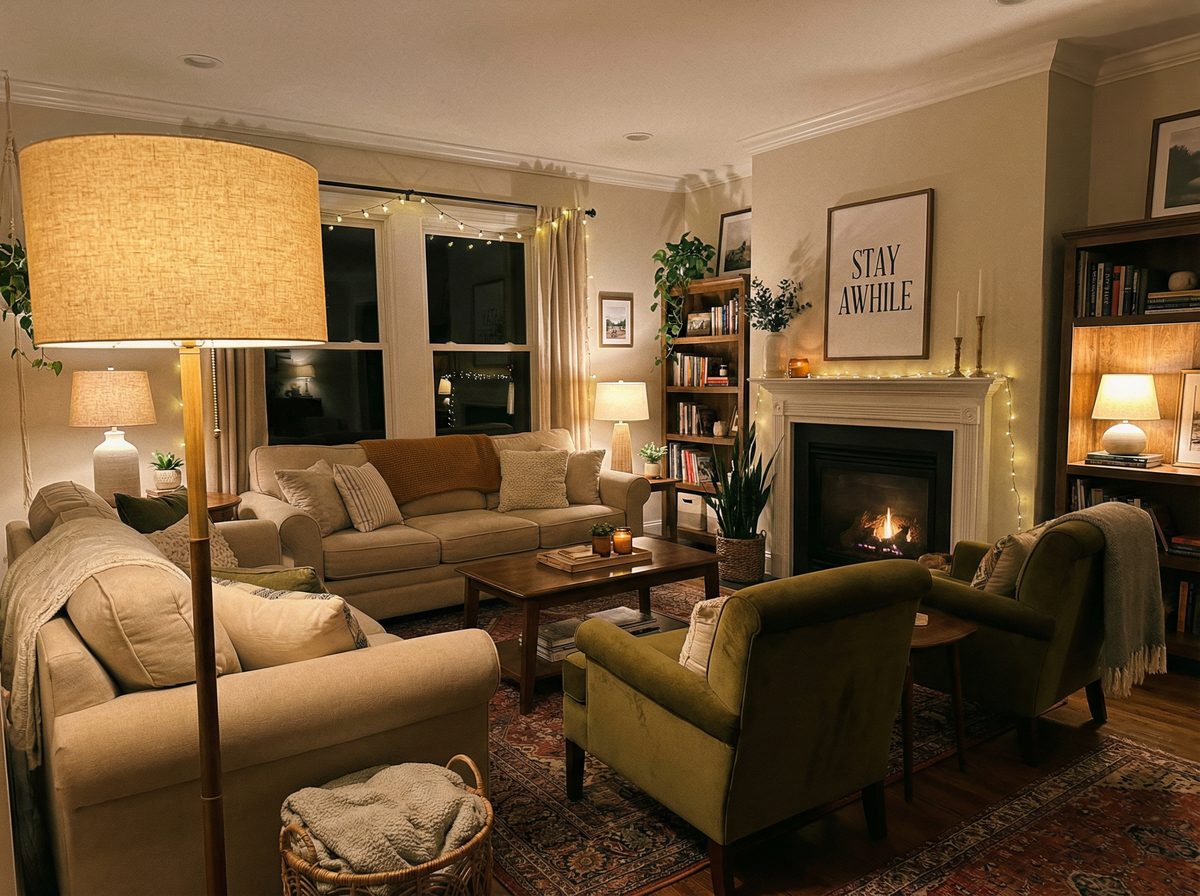
A single chandelier in the middle of the room is the worst lighting scenario, making the space flat, uninteresting, and often uncomfortable. Interior designers always use the principle of layered lighting, which consists of three main types. The first is general (or ambient) light, providing even illumination for the whole room. The second level is task lighting, aimed at a specific area where you perform tasks: a desk lamp for reading, under-cabinet lighting in the kitchen, or a vanity light. The third level is accent (or decorative) lighting, used to create mood and highlight certain interior elements: picture lights, shelf lighting, or soft string lights. By combining these three levels, you can completely change the atmosphere of a room depending on the situation. For example, in the evening you can turn off the bright ambient light and leave only the task light near the sofa and accent light in the corner. This will create a deep, voluminous space and gently prepare you for rest.
Candles, String Lights, and Floor Lamps: Creating Coziness in the Evening
When evening comes, the main goal of lighting is relaxation and creating a "hygge" atmosphere. This is where alternative light sources, not located on the ceiling, come to the rescue. Floor lamps placed in the corners of the room reflect light off the walls, making it soft and diffused. This instantly reduces visual tension. Warm-colored LED string lights are not just for holiday decor. They work wonderfully year-round, adding magic and a festive feel to an ordinary evening; they can be hung on the wall, placed in a large glass vase, or arranged along shelves. But the most powerful tool for creating coziness remains candles. A live flame is something humans have looked at in the evenings for thousands of years. The flicker of a candle not only provides the warmest possible light but also acts as a natural meditation, calming the mind. Try turning off all electric lamps in the living room or bathroom at least once a week and spending the evening entirely by the light of a few candles. This simple ritual perfectly reboots the nervous system after a loud and hectic day.
How to Maximize the Use of Natural Daylight
Artificial lighting can never fully replace natural sunlight, which is the most beneficial for our vision and psyche. Therefore, it is important to let as much of it into your home as possible. Pay attention to your windows: heavy, dark curtains with many layers of fabric often "eat up" most of the light, even when they are drawn back. Replace them with light, translucent sheer curtains or light-colored roller blinds. If a room is dark, use mirrors. A large mirror placed on the wall opposite the window will reflect the sun's rays and make the room visually twice as bright and spacious. It is also important to arrange furniture correctly: your desk or favorite reading chair should be located as close to the window as possible. If you work from home, try to have daylight fall on your desk from the side (rather than shining directly into your eyes or on the monitor). Do not forget to wash your windows regularly — dust and dirt can block up to 20% of sunlight, depriving your home of natural brightness and energy.