
Why We Need a Break from Screens and How to Organize It at Home
Information Noise: How Constant Connectivity Drains Our Nervous System
We live in an era where being offline is considered almost inappropriate. Our phones constantly vibrate with work chats, news alerts, and social media notifications. This continuous stream of information creates so-called "information noise," which our brain is forced to process every second. Even if you do not respond to a notification immediately, its mere presence distracts your attention and scatters your focus. This state of constant readiness to respond exhausts the nervous system more than hard physical labor. We lose the ability to immerse ourselves deeply in work or get proper rest. Background anxiety appears, a feeling that you are always late or missing out on something (FOMO syndrome). A home digital detox is not just a trendy concept; it is a vital necessity for maintaining mental health. It is the process of consciously setting boundaries between you and your devices to regain the ability to be present in the real moment, hear your own thoughts, and fully interact with the loved ones who are right next to you in the physical world.
Creating Gadget-Free Zones: The Bedroom and Kitchen as Living Spaces
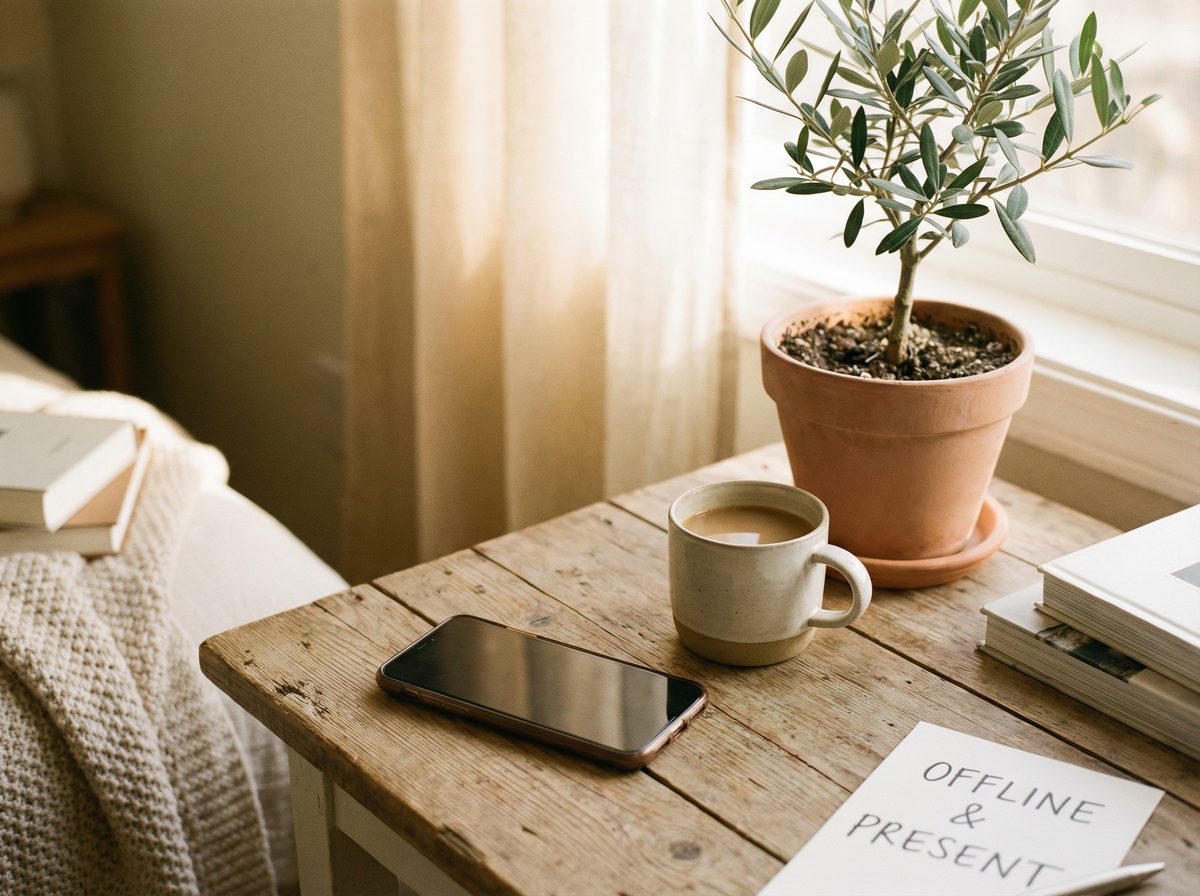
One of the most effective ways to start a digital detox at home is to create physical zones where gadgets are not allowed. The most important such zone is the bedroom. If your phone stays outside the bedroom, you automatically solve two huge problems: you stop scrolling before bed (which improves sleep quality) and you stop grabbing your phone right after waking up (which saves your morning). Buy a regular mechanical alarm clock and leave your phone to charge in the living room. The second important zone is the kitchen or dining table. Eating with a phone in your hand means you don't taste your food, overeat, and miss the chance to talk to your family. Make it a rule: no phones at the table. At first, this may cause discomfort (the brain will demand its usual dose of screen dopamine), but over time you will notice that conversations have deepened and food tastes better. These physical barriers work much better than just promising yourself to "spend less time on the phone," because they create an environment that naturally nudges you toward the right behavior.
How to Implement a "No Social Media Weekend" Rule Without Breaking It
Giving up social media completely forever seems unrealistic and even scary to many, but arranging a digital weekend for yourself is an entirely achievable task. For this experiment to be successful, preparation is needed. First, do not rely solely on willpower. Use technology against itself: delete social media apps from your smartphone on Friday evening, or use app-blocking features (like Screen Time), asking someone close to you to set a passcode you do not know. Second, warn important people that you will be offline, and agree that in an emergency they should call you with a regular phone call. The main reason for failing is boredom. When your hand reaches for the phone out of habit and there is nothing there, a void appears. Therefore, plan what you will do in advance: buy an interesting book, arrange to meet friends in the park, plan a cleaning session, cook a new dish, or visit a museum. When your weekend is filled with real events, the need to peek into virtual life will disappear on its own.
What to Replace Scrolling With During Moments of Boredom
We are used to filling any pause in life (a line at the supermarket, waiting for the elevator, 10 minutes before a meeting starts) by looking through the news feed. But it is precisely these moments of boredom that our brain needs to reboot and generate new ideas. When you take away scrolling, you need to offer the brain an ecological alternative. A great option is to keep an e-book or paper book handy; reading 2-3 pages is much more beneficial than watching short videos. If you are at home, try replacing the phone with physical actions: put together a puzzle, color in an anti-stress coloring book, play with a pet, or water the plants. Working with your hands (even something as simple as washing dishes) wonderfully clears the head. It is also useful to learn how to simply... do nothing. Allow yourself to sit on the couch and look out the window for 15 minutes without any purpose. Observe your thoughts, watch the clouds move. The ability to be alone with yourself without external stimuli is a lost art that is worth bringing back into your daily life.
Digital Hygiene: Setting Up Notifications So They Work for Us
If a full detox seems like too radical a step, start with basic digital hygiene. Your phone is your tool, and you should be the one deciding when to pick it up, not the other way around. The first and most important step: turn off all push notifications except calls and messages from your closest people. You absolutely do not need to know in real-time that someone liked your photo or that an online store started a sale. You will log into these apps yourself when it is convenient for you and check everything at once. Set up a scheduled "Do Not Disturb" mode: for example, from 9:00 PM to 8:00 AM, your phone should not make any sounds. Use notification grouping features so they do not arrive one by one throughout the day, but rather as a single list twice a day (e.g., at 12:00 PM and 6:00 PM). Clean up your home screen: leave only functional apps there (maps, calendar, notes), and hide all social media and games in folders on the second or third page to make them harder to access. Such simple tweaks return control over your own attention to you.